



You may have seen numerous headlines recently warning of rising inflation and interest rate hikes.
Such reports can be unsettling, leaving you wondering what bumps may be on the road ahead – and what they could mean for your financial plan.
What’s more, on 28 October chancellor John Healey announced a string of changes in his inaugural Autumn Budget. While some of these changes aim to provide some “breathing space” from rising prices, others could affect your savings’ tax bill at a time when interest rates are expected to increase.
To make sense of the latest inflation and interest rate forecasts, as well as the Autumn Budget changes, read on to discover what it could all mean for your spending, saving, and financial future.
Forecasts suggest inflation will continue rising in 2027
Throughout 2026, energy prices soared globally, driving costs up across sectors and regions.
According to the Office for National Statistics, inflation rose from 2.6% in June 2026 to 3.5% in September 2026.
Before the outbreak of war in the Middle East in February 2026, the Bank of England (BoE) was expecting to hit its 2% inflation target in April 2026. However, with energy prices remaining high, the Office for Budget Responsibility now expects inflation to stay above 2% until 2028, peaking at 3.8% in early 2027.
Inflation may increase your everyday expenses, as well as the cost of future goals
Rising prices can squeeze your household budget, leaving less left over at the end of the month.
As a result, you may pay less into your savings, investments, or pension, potentially knocking your financial plan off course.
The cost of achieving your goals could also rise more quickly than anticipated. Whether you’re saving for a bucket-list holiday in a few years’ time or planning for retirement, higher inflation could mean you need to set more aside to achieve your goals.
As prices rise, it may be worth reviewing your household budget and asking yourself what you can afford to cut back on.
You may not need to make significant lifestyle changes, and in some cases, you might be able to cut costs without making big sacrifices.
If you’re worried that your financial goals might be drifting out of reach, our financial planners will be happy to support you in reviewing your spending, saving, and investing habits to help you stay on track.
Healey’s Budget offered some “breathing space” from high inflation
In the 2026 Autumn Budget, Healey announced a number of measures to ease the rising cost of living, including:
- VAT on domestic electricity will remain at 0% until 1 July 2027, extending the temporary reduction by three months
- The 5p fuel duty cut will also be extended to 1 July 2027
- A Household Energy Payment of £100 will be made to households in Council Tax bands A to D in England from January 2027
· Import tariffs on household staples and farming goods will be removed, potentially resulting in lower prices.
You might wish to consider these new policies when reviewing your household budget. That said, they are unlikely to have a dramatic effect on your finances, meaning you could need to take further steps to keep your spending within budget.
Multiple interest rate hikes are expected in the months ahead
When inflation rises, the BoE may hike interest rates in a bid to reduce borrowing – and therefore spending – and bring inflation under control.
On 5 November, the BoE increased the interest rate for the first time in three years. Having held steady at 3.75% throughout the year so far, the rate has now risen to 4%. What’s more, some commentators forecast interest rates could rise further, reaching 4.25% by mid-2027.
High interest rates could mean your savings grow more quickly
High interest rates can create greater opportunities to grow your savings, with more competitive savings rates generally becoming available as the BoE base rate increases.
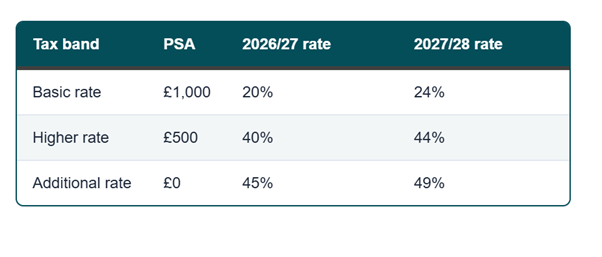
As your interest earnings grow, it’s important to consider your tax liabilities. Interest earned on non-ISA savings may be taxed if it exceeds your Personal Savings Allowance (PSA). In the 2026 Autumn Budget, Healey announced that Income Tax for savings will rise above the marginal rates by a further two percentage points – with his predecessor having already planned to increase rates by two percentage points from April 2027.
(Read more in this article from July's newsletter: How to protect your savings from a rising tax liability)
Fortunately, Healey also announced that previous plans to reduce the Cash ISA allowance to £12,000 from April 2027 will not go ahead. Savers will therefore be able to continue paying up to £20,000 a year into their ISAs, with interest earnings exempt from taxation.
Creating a plan can help you mitigate the effects of rising rates
The uncertainty of rising prices and interest rate hikes can be unsettling. But by reviewing your spending, creating a plan, and staying on top of changes to interest rates and tax rules, you can take steps to help your money go further in a climate of rising prices.
Whether you’re looking for support with budgeting, tax efficiency, or growing your wealth, Dodd Wealthcare is on hand to help you build towards your financial goals.
Email info@doddwealthcare.co.uk or call 01228 530913 / 01768 864466 to learn more about how we can help.
Please note
This article is for general information only and does not constitute advice. The information is aimed at individuals only.
All information is correct at the time of writing and is subject to change in the future.
Please do not act based on anything you might read in this article. All contents are based on our understanding of HMRC legislation, which is subject to change.
The Financial Conduct Authority does not regulate tax planning.
